Fall Storm Season Roof Checklist for Williamson County TX Homeowners
Williamson County sits on the southern end of the Southern Plains hail corridor, and fall is the storm season newer residents do not expect. October and November cold fronts moving across warm Gulf air produce the hail and wind that put roofs in Taylor, Granger, Thrall, Florence, and Jarrell into insurance claims every year.
If you moved to Williamson County recently – and with the Samsung semiconductor facility driving growth through Taylor and the surrounding communities, thousands of households have – this may be your first Central Texas fall storm season. It is worth an hour of preparation.
1. Inspect From Ground Level First
Walk the perimeter of the house and look up at each roof slope in turn. You are looking for shingles that are lifted, curled, cracked, or missing, and for courses that look out of alignment with those around them.
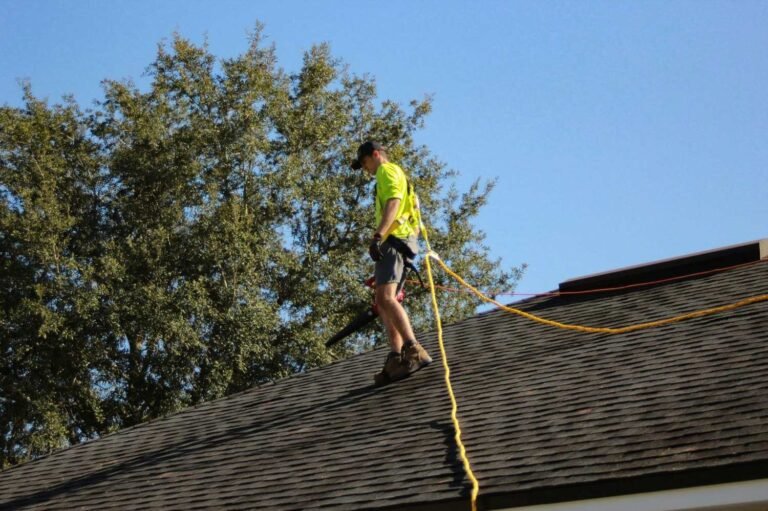
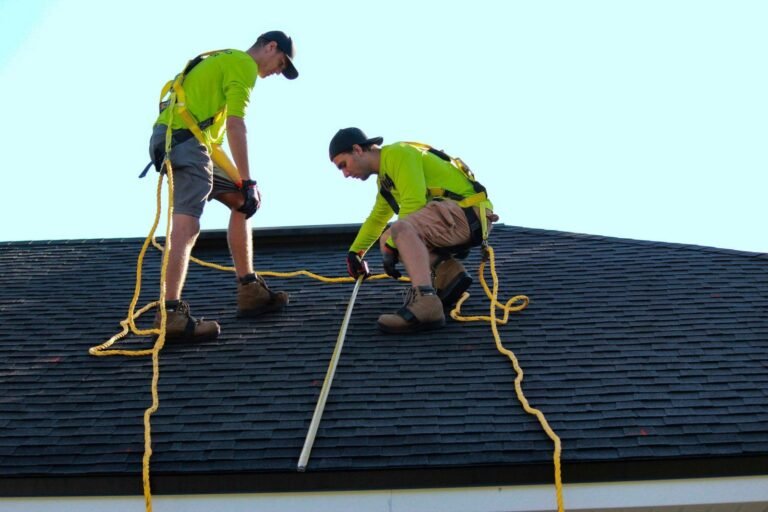
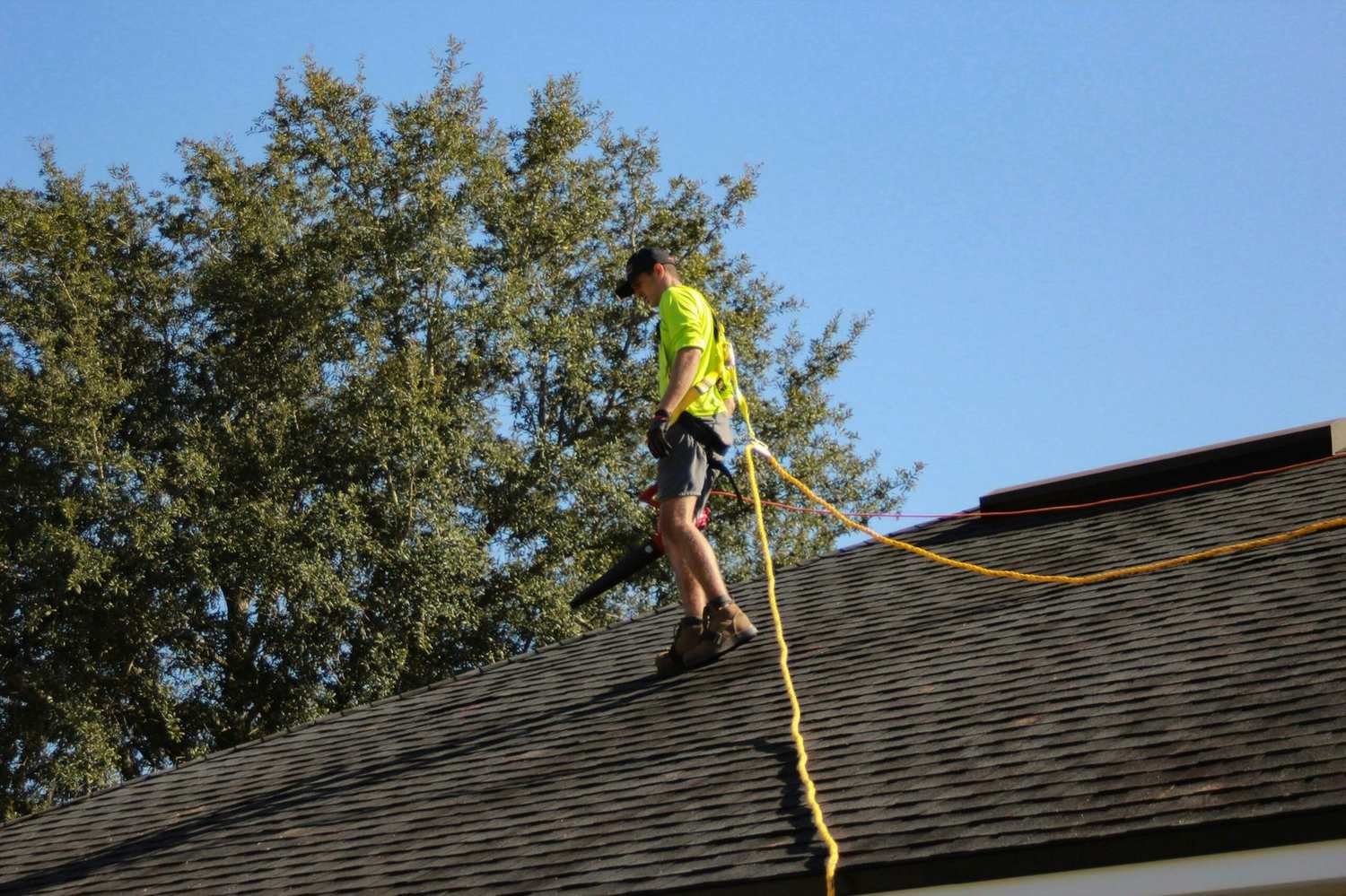
Binoculars help. Do not get on the roof – it is the most dangerous part of this process and the least productive, since hail bruising is largely invisible to an untrained eye even up close. What you are building is a baseline you can compare against after a storm.
2. Check the Gutters and Downspouts
A clogged gutter backs water up under the shingle edge, and Williamson County’s fall rains will find any gap that creates. Clear the troughs, flush the downspouts, and make sure water discharges well away from the foundation.
While you are there, look at what comes out. Shingle granules in the gutter are the roof telling you its protective surface is wearing through. A few granules on a new roof are normal shedding. A layer of them on a roof past ten years means the asphalt mat underneath is losing its shield – and that is the condition that turns a survivable hail strike into a replacement.
3. Look for Missing Granules
Granules take the UV and the hail impact so the asphalt beneath them does not. Once they are gone, a shingle ages quickly.
From the ground, granule loss appears as patches that look darker or shinier than the shingle around them – that is exposed asphalt. Check below downspouts and in splash areas for accumulation. Central Texas combines severe summer UV with repeated hail, and Williamson County roofs routinely lose granule coverage faster than the shingle’s rated life assumes.
4. Assess the Flashing
Flashing seals the transitions shingles cannot cover – chimneys, vent pipes, skylights, and walls meeting roof planes. It is where leaks usually begin.
Look for flashing that has lifted, pulled away, rusted, or lost its sealant bead. Pay particular attention to the rubber boots around vent pipes: they dry out, crack, and split, and a split boot leaks in every rain no matter how sound the shingles are. On newer Williamson County construction, boots are also a common builder shortcut – worth checking even on a young roof.
5. Document Everything With Photos Before a Storm Hits
Take dated photographs of every slope, the gutters, the flashing, and any damage you already see, shot from consistent positions. Keep them somewhere retrievable.
When you file a hail claim, part of the adjuster’s job is distinguishing new storm damage from existing wear. Without before photos that becomes their assessment against your memory. With them, the delta between the two sets is your claim. This is the cheapest insurance available and it takes fifteen minutes.
Williamson County Fall Storm Timing
Spring is the larger hail season across Central Texas, but Williamson County sees a real secondary peak through October and November. The mechanism is the same – cold fronts colliding with warm, moist air – and the hail that results is fully capable of totaling a roof.
Fall damage tends to be worse in consequence because it is cumulative. A roof that took spring hail and was never inspected enters October with granule loss and bruised shingles already in place. The October storm that a sound roof would shrug off is the one that starts the leak.
For households new to Taylor TX 76574 and the surrounding communities, one note: a roof that looks new is not necessarily undamaged. Much of the recent construction here has gone up fast, and we regularly find installation defects and spring hail damage on roofs under five years old. Age is not a substitute for an inspection.
FAQ
Q: How often should I inspect my roof in Williamson County TX?
A: Twice a year – before spring storm season and again in early fall – plus after any significant hail or wind event. Two storm seasons make an annual-only schedule insufficient here.
Q: My house in Taylor TX is only three years old. Do I still need a roof inspection?
A: Yes. New construction does not mean undamaged. We routinely find spring hail damage and installation defects – improperly sealed vent boots and valley flashing especially – on Williamson County roofs under five years old. A young roof with unaddressed hail damage still fails early.
Q: Does fall hail really happen in Williamson County, or is it a spring problem?
A: Both. Spring is larger, but Williamson County gets damaging hail and straight-line wind through October and November most years.
Q: What does a free roof inspection include?
A: A slope-by-slope examination, flashing and vent boot check, photographic documentation of any hail bruising or wind damage, and a written assessment you can take to your insurer. No cost, no obligation.
Get Your Roof Inspected Before the Next Front
If your walkaround turned up lifted shingles, granules in the gutter, or cracked vent boots, have it looked at before the next front rather than after it. Call Williamson County Roofing Pros at (254) 500-3913 for a free inspection anywhere in Williamson County TX.
If you already have damage, see our pages on storm damage roof repair in Taylor TX and hail damage roof repair in Williamson County. Call (254) 500-3913.